
A New Era for Indian Classrooms
If you are a student, a parent, or a teacher in the CBSE ecosystem, you’ve likely felt the winds of change blowing through the hallways. The days of “rote memorization”—where success depended on how much you could cram into your brain the night before a final exam—are officially numbered.
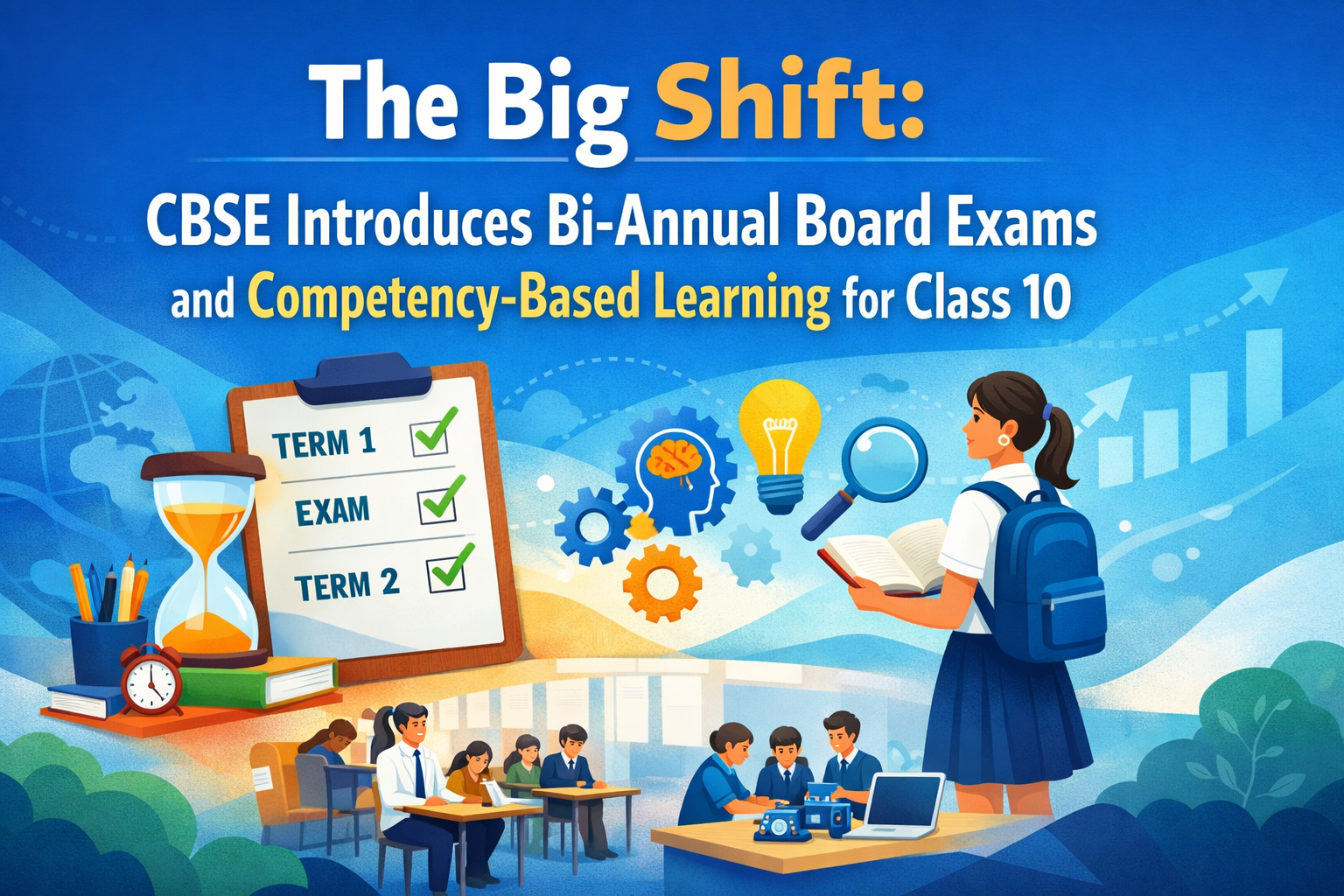
In a landmark move aligned with the National Education Policy (NEP) 2020, the Central Board of Secondary Education (CBSE) has announced a transition to bi-annual exams and a significant increase in competency-based questions.
This isn’t just a tweak to the timetable; it’s a fundamental shift in how we learn and what we value in education. Let’s dive deep into what this means for you.
Why the Change? The Philosophy of NEP 2020
For decades, the Indian education system was criticized for being a “pressure cooker.” A single three-hour window in March determined a student’s future. This led to high stress, a thriving “coaching culture,” and students who could solve complex equations but couldn’t apply them to real-life problems.
The Ministry of Education and CBSE are moving toward a model that:
- Reduces Stress: By providing more opportunities to perform.
- Encourages Deep Learning: Shifting focus from “what” you know to “how” you use it.
- Flexible Assessment: Giving students the choice to take exams when they feel ready.
Twice the Opportunity: Bi-Annual Board Exams Explained
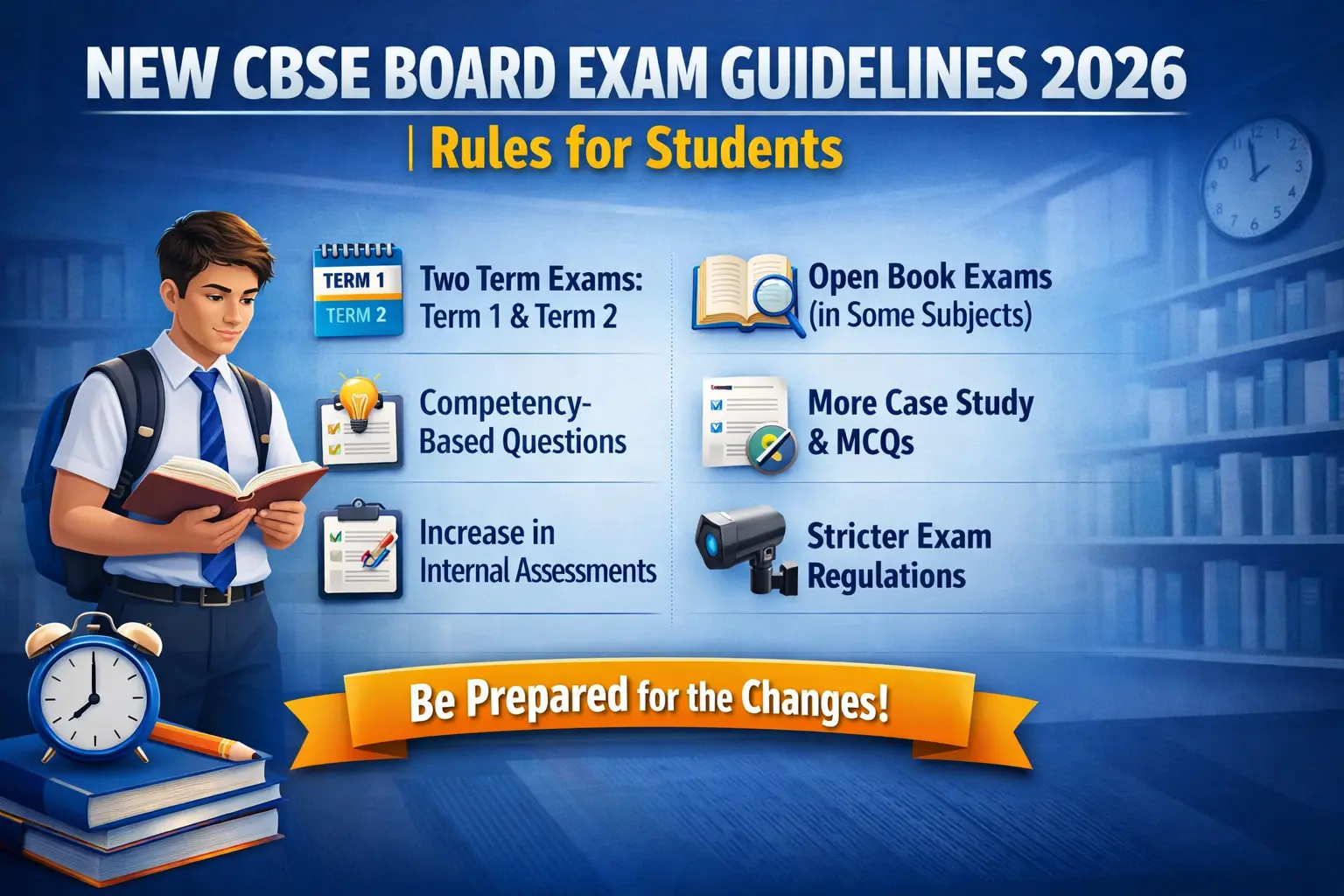
One of the most talked-about changes is the introduction of board exams twice a year. Starting from the 2025-26 academic session, students will no longer have to wait an entire year to improve their scores.
How will it work?
Contrary to some rumors, this is not a semester system where half the syllabus is tested in Term 1 and the other half in Term 2. Instead:
- Choice is Key: Students will have the option to appear for the board exams twice a year.
- Best Score Wins: If a student appears for both sessions, the board will consider the best of the two scores for the final marksheet.
- Flexibility: A student can choose to appear for all subjects in the first window, or split them, or only appear for a second session if they aren’t satisfied with their first attempt.
Teacher’s Insight: Think of this like an “upgrade” option. It removes the “do-or-die” fear of a single exam day. If you have a bad day or fall ill during the first session, your entire year isn’t wasted.
The Rise of Competency-Based Questions (CBQs)
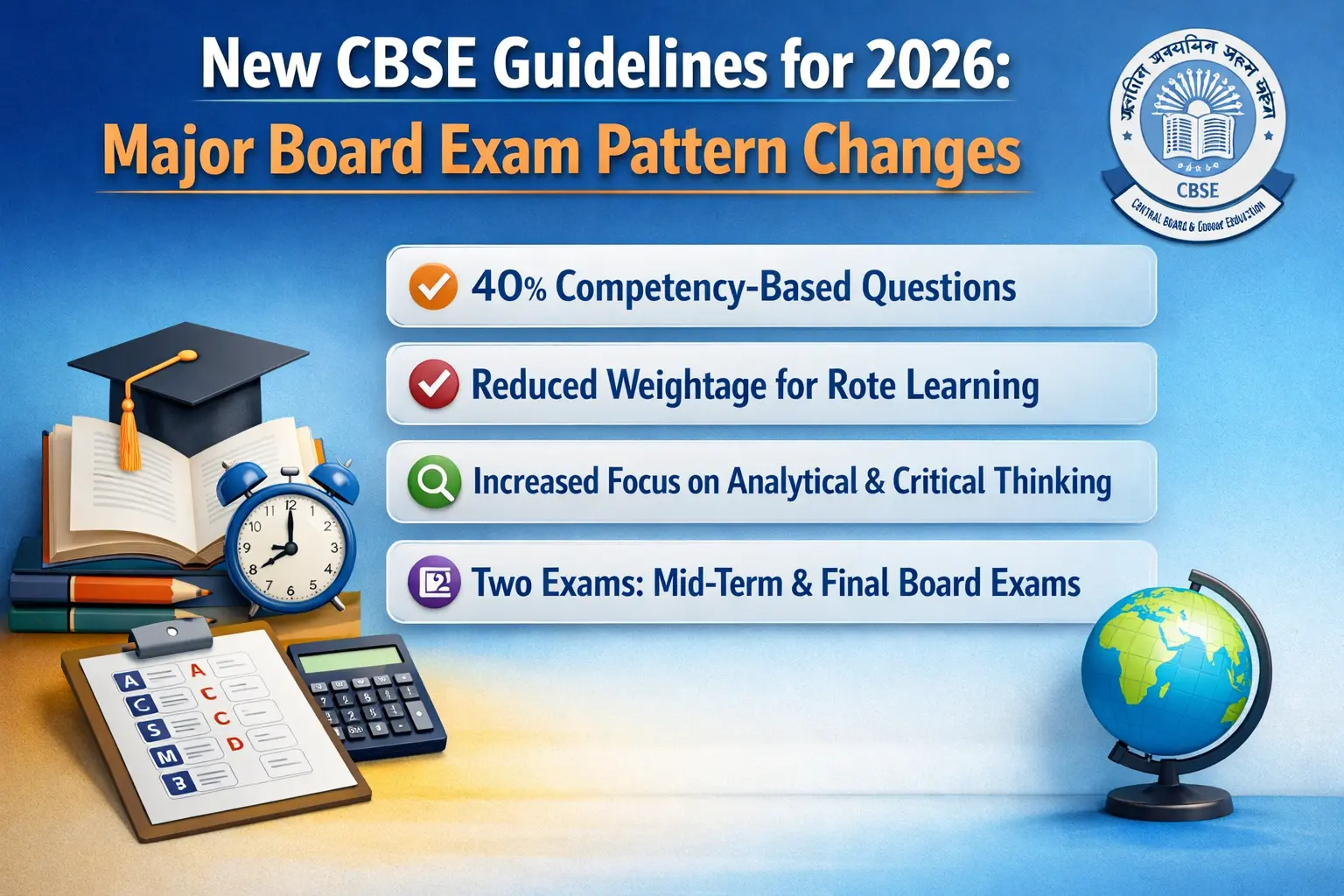
While the frequency of exams is changing, the content of the question papers is undergoing an even bigger transformation. CBSE is steadily increasing the weightage of Competency-Based Questions (CBQs) for Class 10.
What are Competency-Based Questions?
These are questions that test the application of concepts in real-life or unfamiliar situations. They move away from “Define Photosynthesis” to “If a plant is kept in a room with only green light, how would its growth be affected?”
Types of CBQs you will encounter:
- Multiple Choice Questions (MCQs): Often case-based where you must choose the best logical outcome.
- Case-Based Studies: A paragraph or data set followed by questions that require analysis.
- Assertion and Reasoning: Testing your ability to understand the ’cause and effect’ relationship between facts.
- Source-Based Questions: Analyzing maps, images, or historical extracts.
For the upcoming sessions, nearly 50% of the question paper for Class 10 will consist of these competency-based formats.
Subject-Wise Impact: What Changes for You?
Mathematics
Forget just memorizing formulas. You’ll see more problems based on financial literacy, architecture, or data trends. You’ll need to understand why a formula works to solve a case study about building a bridge or calculating interest on a loan.
Science
Expect fewer direct diagrams and more experimental analysis. You might be given a set of observations from a lab experiment and asked to identify the error or predict the next result.
Social Science
The focus is shifting toward citizenship and critical thinking. Instead of just dates, you might be asked to compare historical events with modern-day governance or analyze the impact of a specific climate policy on a given map.
Languages (English/Hindi)
The emphasis is on unseen passages and creative writing. The goal is to ensure you can communicate effectively, infer hidden meanings, and synthesize information rather than just summarizing a chapter from the textbook.
How to Prepare: Strategies for the New Pattern
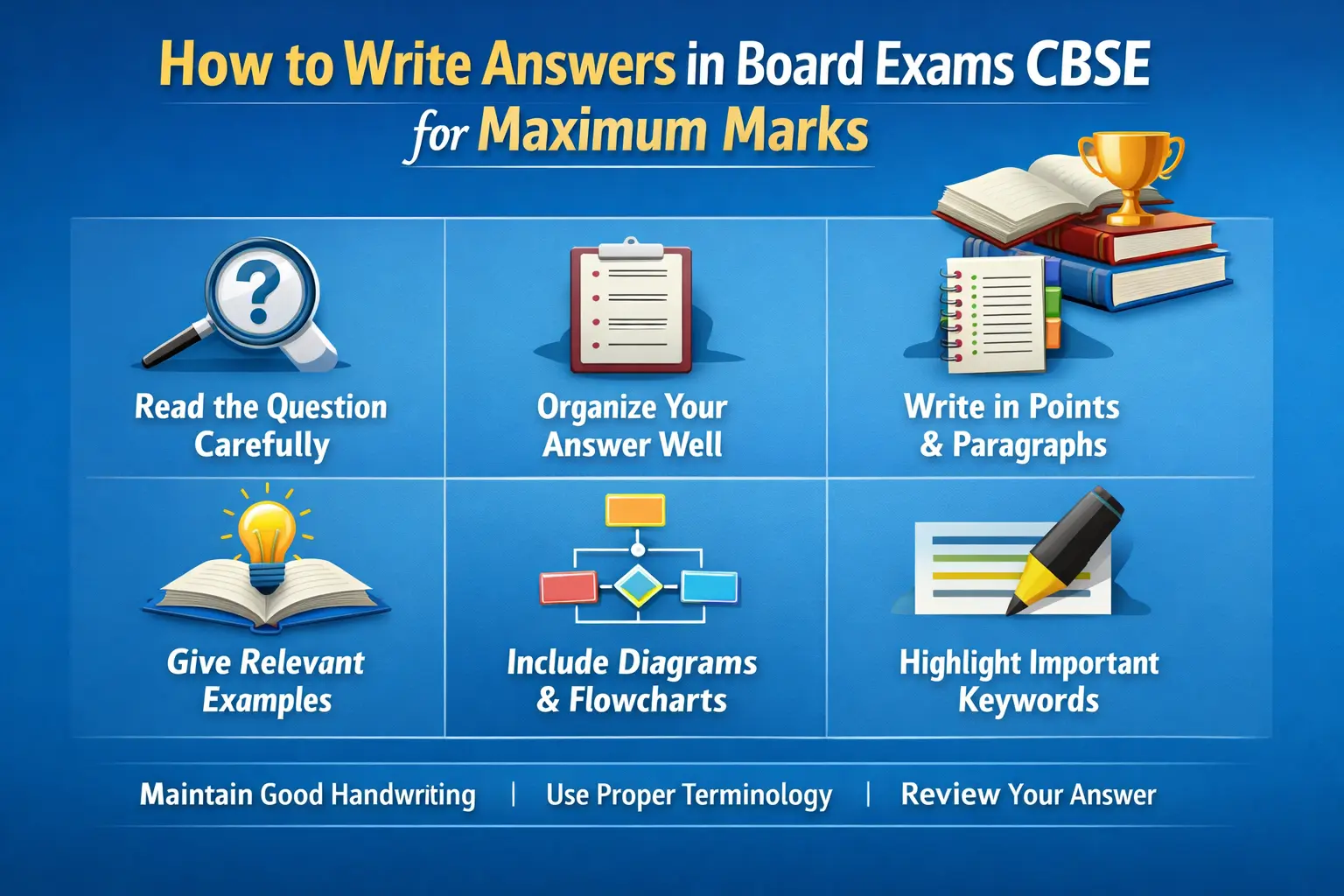
Since the “cramming” method is becoming obsolete, students need a new toolkit for success.
- Focus on ‘The Why’: When studying a topic, always ask, “Where is this used in real life?”
- NCERT is Still King (But with a twist): Read between the lines of your NCERT textbooks. Pay close attention to the “Activity” boxes and “Exemplar” problems.
- Practice Case Studies: Don’t just solve back-exercise questions. Seek out question banks that focus on case-based learning.
- Conceptual Clarity over Completion: It is better to understand 80% of the syllabus deeply than to “finish” 100% superficially.
- Simulated Testing: Take mock tests that mirror the new 50% competency-based weightage.
The Impact on Teachers and Schools
This shift requires a massive change in pedagogy. Teachers are no longer just “information providers”; they are becoming “facilitators of thinking.”
Schools are now encouraged to:
- Incorporate more hands-on projects.
- Use interdisciplinary approaches (e.g., teaching the physics of sound through a music class).
- Conduct formative assessments that track a student’s progress throughout the year, not just at the end.
Final Thoughts: Embracing the Future
Change can be intimidating, especially when it involves something as significant as Board Exams. However, these changes are designed with the student’s best interest at heart. By moving away from a high-stakes, memory-based system, CBSE is preparing Indian students to compete on a global stage where critical thinking and problem-solving are the most valuable currencies.
So, take a deep breath. This new system gives you a safety net and rewards your true understanding. It’s time to stop studying for the “marks” and start studying for the “skills.”
Frequently Asked Questions (FAQs)
Q: Is it mandatory to take the board exam twice? A: No. It is entirely optional. If you are satisfied with your performance in the first session, you do not have to appear for the second.
Q: Will the syllabus increase because there are two exams? A: No, the syllabus remains the same. The bi-annual format is designed to give you more chances, not more work.
Q: Are these changes applicable to Class 12 as well? A: Yes, the move toward bi-annual exams and increased competency-based questions is being rolled out for both Class 10 and 12 in a phased manner.
Q: Will the second exam be harder than the first? A: CBSE aims for “equivalence” in difficulty levels across different sets and sessions to ensure fairness.