
The Central Board of Secondary Education (CBSE) has introduced significant updates to its examination framework for the academic year 2025-26, bringing substantial changes that will affect lakhs of students appearing for their Class 10 and Class 12 board examinations. These new guidelines reflect CBSE’s ongoing commitment to holistic education, skill development, and reducing exam-related stress among students. Parents and students need to understand these changes thoroughly to prepare effectively and align their study strategies with the updated examination pattern.
Understanding the CBSE Board Exam Rules and Regulations for Students
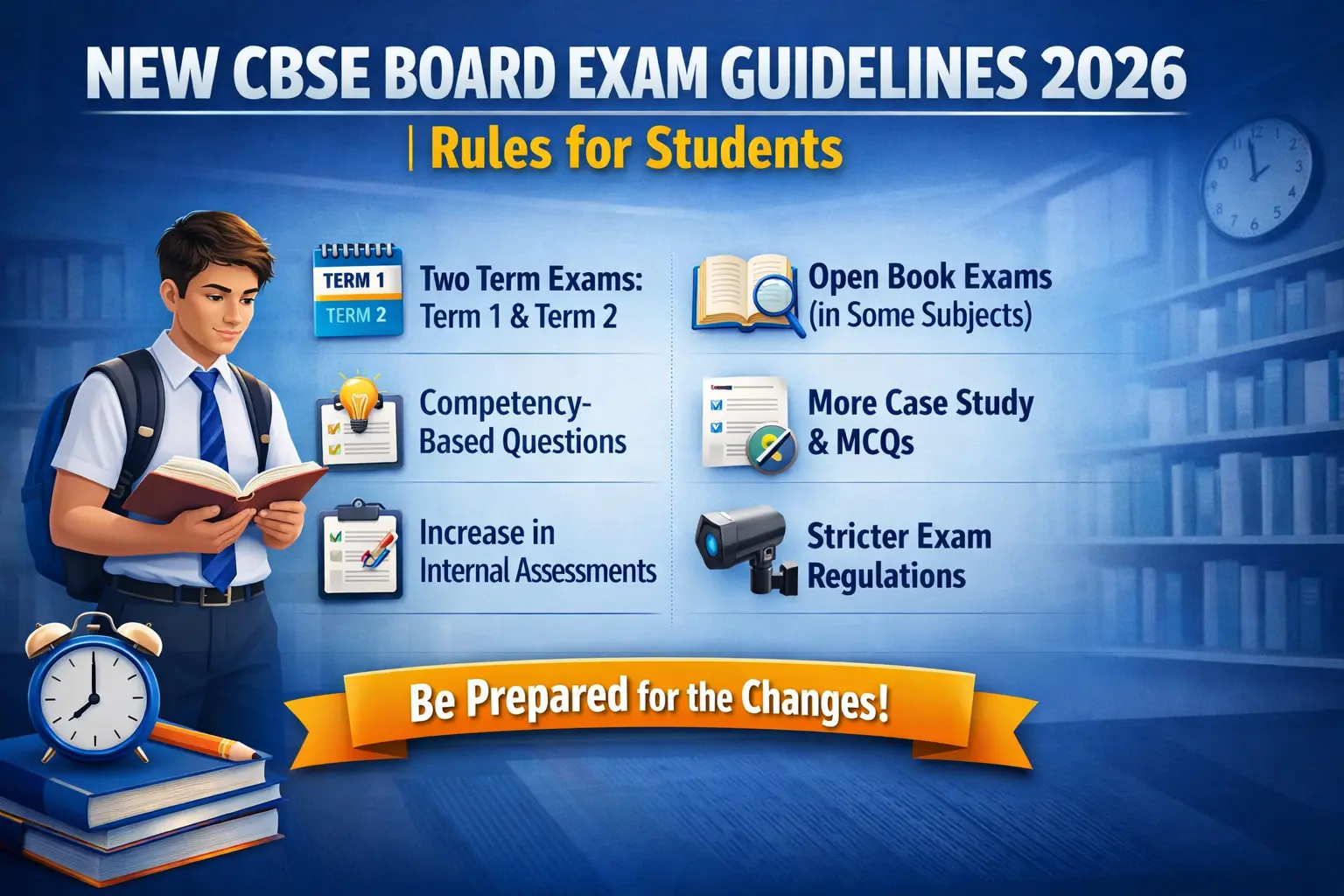
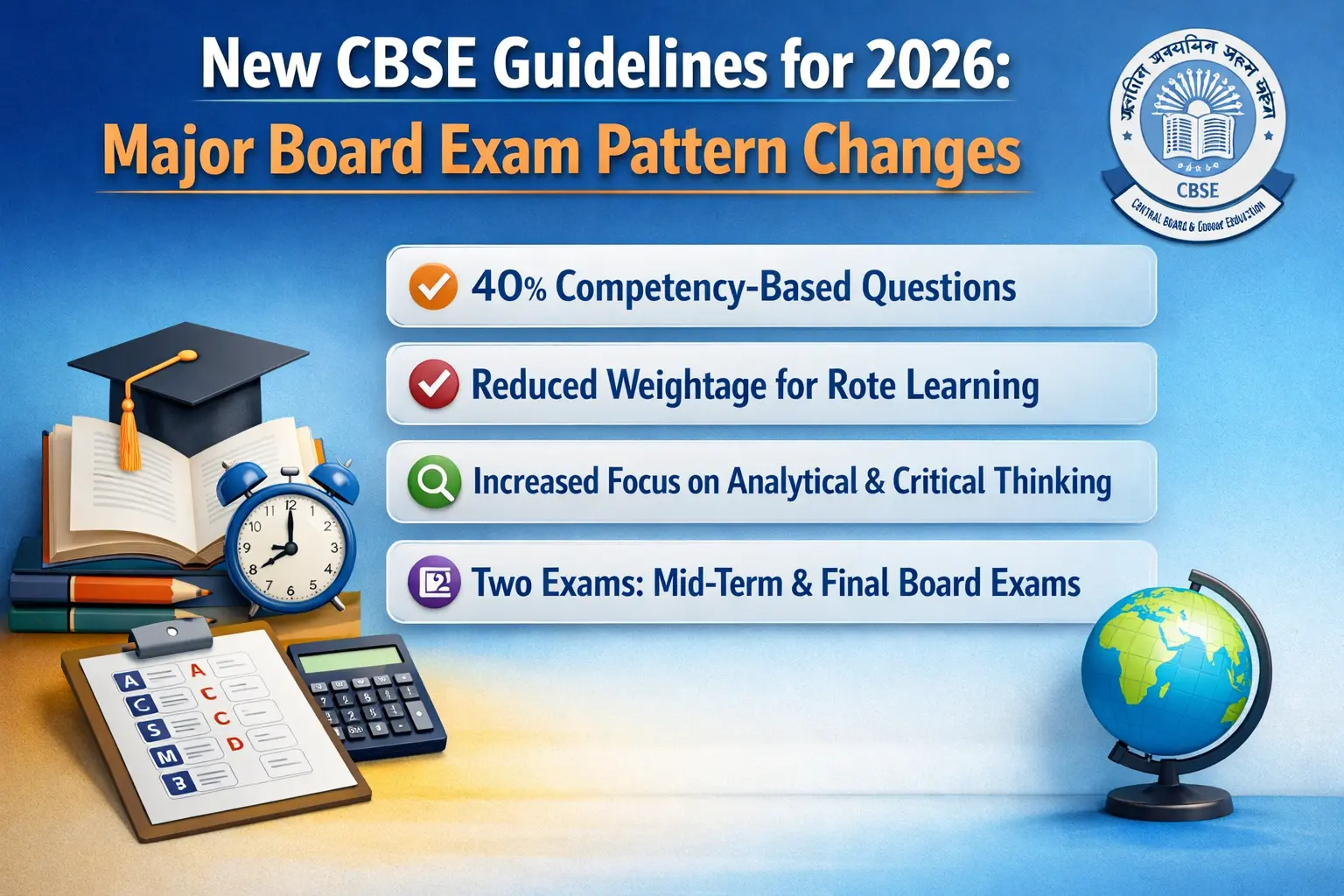
The CBSE board exam rules and regulations for students have undergone a comprehensive revision this year. The Board has emphasized competency-based assessment rather than rote learning, making it essential for students to develop conceptual clarity and practical understanding of subjects. Under the new framework, students will be evaluated not just on their ability to memorize facts, but on their capacity to apply knowledge, analyze situations, and solve real-world problems.
For CBSE board exams 2026, the examination structure maintains the division between theory and internal assessment, but with modified weightage and evaluation criteria. The Board has clarified that all students must secure passing marks in both components separately to be declared successful in a particular subject. This dual requirement ensures that students engage meaningfully with both classroom learning and examination preparation.
Key Highlights of New CBSE Guidelines for 2026
Revised Question Paper Design
One of the most significant aspects of the new CBSE guidelines for 2026 is the restructured question paper format. The Board has introduced a competency-focused approach where questions will be distributed across different cognitive levels based on Bloom’s Taxonomy. Approximately 40% of questions will test basic knowledge and understanding, 40% will assess application and analysis skills, and the remaining 20% will evaluate higher-order thinking abilities including synthesis and evaluation.
This distribution means students cannot rely solely on textbook memorization. They must develop the ability to interpret data, draw connections between concepts, and present well-reasoned arguments. For instance, in subjects like Science and Mathematics, there will be a greater emphasis on numerical problems, case-based questions, and scenario analysis rather than direct theory-based questions.
Changes in Internal Assessment Structure
The internal assessment component has been redefined with clearer guidelines and standardized evaluation rubrics. For the CBSE Class 10 board exam, internal assessment carries 20 marks in most subjects, while for Class 12, it varies between 20 to 30 marks depending on the subject. The new guidelines specify that internal assessment must include:
Periodic Tests: Schools will conduct three periodic tests throughout the academic year, with the best two performances being considered for final evaluation. This reduces pressure on students and allows for consistent performance assessment rather than one-time judgment.
Subject Enrichment Activities: These activities are designed to develop practical skills and subject-specific competencies. For languages, this includes speaking and listening skills assessment. For Science, practical experiments and project work form the core. For Social Science, map work and project-based learning are emphasized.
Portfolio and Notebook Maintenance: Students are required to maintain well-organized notebooks and subject portfolios demonstrating their continuous learning journey. Regular review and systematic organization of class notes contribute to internal assessment marks.
CBSE Board Exam Pattern 2026: Subject-Wise Analysis
Language Papers
The language papers for both Hindi and English have been restructured to promote communicative competence. The CBSE board exam pattern 2026 for languages includes:
- Reading Comprehension: Two unseen passages with a mix of Multiple Choice Questions (MCQs), Very Short Answer Questions, and Short Answer Questions
- Writing Skills: Letter writing, article writing, and report writing with emphasis on format, coherence, and expression
- Literature: Questions based on prescribed textbooks including MCQs, extract-based questions, and long-answer questions requiring critical appreciation
- Grammar: Integrated grammar assessment within reading and writing sections rather than isolated grammar questions
Mathematics
Mathematics remains a crucial subject where the Board has introduced more application-based problems. The paper design includes:
- Section A: MCQs and Assertion-Reason questions testing conceptual understanding
- Section B: Short answer questions requiring step-by-step problem-solving
- Section C: Long answer questions with internal choices, focusing on complex problem-solving
- Section D: Case-based questions presenting real-life scenarios where mathematical concepts must be applied
Students preparing for the CBSE board exam for Class 12 Mathematics will find increased weightage on calculus applications, three-dimensional geometry, and probability, while Class 10 students will see more emphasis on practical applications of algebra, trigonometry, and statistics.
Science Subjects
For the CBSE Class 10 board exam in Science, the paper now includes a dedicated section on case-based/passage-based integrated questions worth 20 marks. These questions present a scientific scenario or research finding, followed by sub-questions testing comprehension, application, and analytical thinking.
For Class 12, separate papers for Physics, Chemistry, and Biology have incorporated more numerical problems and diagram-based questions. The practical examination guidelines have been tightened, with mandatory viva voce and proper lab record maintenance being crucial for securing good marks.
Social Science
The Social Science paper structure for Class 10 emphasizes map-based questions, source-based questions, and case studies. Students must develop the ability to interpret historical sources, analyze geographical data from maps and diagrams, and understand political and economic concepts through contemporary examples.
CBSE Board Exam Subjects for 2026: Mandatory and Optional Choices
The CBSE board exam subjects for 2026 continue to offer flexibility while maintaining certain mandatory requirements. For Class 10, students must appear in five subjects: three languages (with at least two Indian languages or one Indian language and a foreign language), Mathematics, Science, and Social Science. However, students can opt for additional subjects if they wish to improve their overall percentage.
For Class 12, subject selection depends on the stream chosen—Science, Commerce, or Humanities. The Board has clarified that students must appear in at least five subjects including one language. The new guidelines emphasize that schools should counsel students properly regarding subject selection based on their aptitude and career aspirations rather than peer pressure or parental expectations alone.
Internal Choice and Marking Scheme Modifications
A student-friendly feature retained and enhanced in the new guidelines is the provision of internal choice. In most theory papers, students will have options to choose between questions in sections requiring long answers. For example, in a section with four long-answer questions of 5 marks each, students might be required to attempt any three, giving them the flexibility to skip one question they find challenging.
The marking scheme has been made more transparent with clear distribution of marks for different steps in problem-solving. In Mathematics and Science, step-marking ensures that students receive appropriate credit for their method and approach even if the final answer is incorrect due to a calculation error.
Practical Examination and Skill Assessment
Practical examinations for Science subjects have been standardized with detailed guidelines provided to schools. The CBSE Guideline specifies that practical exams must be conducted throughout the year with proper documentation. For the final practical examination:
- Experimental Skills: Students must demonstrate their ability to perform prescribed experiments accurately
- Viva Voce: Oral examination to test conceptual understanding of practical work
- Lab Record: A well-maintained practical notebook with observations, calculations, and conclusions
- Project Work: Original project demonstrating application of scientific concepts
For subjects like Computer Science, Information Technology, and other skill subjects, practical assessment carries significant weightage and requires students to demonstrate hands-on proficiency.
Continuous and Comprehensive Evaluation (CCE) Components
While board examinations remain the primary assessment mode for Classes 10 and 12, the new guidelines reinforce the importance of continuous evaluation throughout the academic year. Schools are required to:
Conduct Regular Assessments: Beyond the three periodic tests, schools must conduct regular class assessments, quizzes, and assignments to keep students engaged and monitor their progress.
Maintain Detailed Records: Comprehensive records of each student’s performance, attendance, and participation must be maintained and made available to parents regularly.
Provide Feedback: Constructive feedback on student performance should be provided after each assessment, highlighting strengths and areas needing improvement.
Special Provisions and Student Support
The CBSE board exams for Classes 10 and 12 include special provisions for students with different needs:
Students with Disabilities: Extra time, scribe facility, and compensatory marks for visually impaired students and those with learning disabilities are provided as per documented requirements.
Compartment Examinations: Students who fail in one or two subjects can appear for compartment exams, giving them an opportunity to complete their certification without losing an entire year.
Re-evaluation and Verification: Students have the right to apply for re-evaluation of answer scripts or verification of marks if they believe there has been an error in evaluation.
Preparation Strategies for CBSE Board Exams 2026
Given the new examination pattern, students should adopt these preparation strategies:
Understand the Syllabus Thoroughly: Go through the official CBSE syllabus document and understand which topics carry more weightage.
Practice Previous Year Papers: While the pattern has changed, solving previous years’ papers helps understand question types and manage time effectively.
Focus on NCERT Textbooks: NCERT books remain the foundation for CBSE examinations. Thoroughly read, understand, and practice all exercises.
Develop Conceptual Clarity: Move beyond memorization to understand concepts deeply, especially in Science and Mathematics.
Regular Revision: Create a revision schedule ensuring each subject is reviewed multiple times before examinations.
Maintain Neat Notebooks: Well-organized notes not only help in internal assessment but also serve as excellent revision material.
Role of Schools and Teachers
Schools play a crucial role in implementing these new guidelines effectively. Teachers are expected to:
- Familiarize themselves with the updated assessment framework
- Conduct practice sessions with competency-based questions
- Provide individual attention to students struggling with specific topics
- Conduct mock tests simulating actual board exam conditions
- Maintain transparent communication with parents regarding student progress
Parent’s Role in Supporting Students
Parents should understand that the new guidelines aim to reduce stress while ensuring quality education. They can support their children by:
- Creating a conducive study environment at home
- Encouraging regular study habits rather than last-minute cramming
- Monitoring progress without creating excessive pressure
- Communicating with teachers to understand their child’s strengths and weaknesses
- Ensuring proper nutrition, sleep, and exercise during preparation period
Technology Integration in Assessment
The new CBSE guidelines also acknowledge the role of technology in education. While examinations remain pen-and-paper based for 2026, the Board encourages schools to use digital platforms for:
- Sharing study materials and resources
- Conducting online practice tests
- Providing instant feedback on assignments
- Facilitating doubt-clearing sessions
Some pilot programs are exploring computer-based testing for specific subjects, which may be expanded in future years.
Frequently Raised Concerns and Clarifications
Will the difficulty level increase? The difficulty level remains balanced, but the nature of questions has shifted toward application and analysis rather than mere recall.
How should students manage internal assessment? Regular participation in class activities, timely completion of assignments, and consistent performance in periodic tests ensure good internal assessment marks.
Are reference books necessary? While NCERT books are primary, quality reference books can help in gaining additional practice and exposure to different question types.
Conclusion
The new CBSE guidelines for 2026 represent a progressive step toward competency-based education and holistic student development. While changes in examination patterns might initially seem daunting, they ultimately benefit students by encouraging deeper understanding and practical application of knowledge. Success in CBSE board exams now depends not on memorizing vast amounts of information but on developing genuine understanding, analytical skills, and the ability to express ideas clearly.
Students appearing for CBSE board exams for Classes 10 and 12 should embrace these changes positively, viewing them as opportunities to develop skills valuable beyond the classroom. With proper planning, consistent effort, and the right guidance from teachers and parents, students can not only excel in their board examinations but also build a strong foundation for future academic and professional pursuits.