
The classroom falls silent. Pencils hover mid-air. Your child looks up from their study desk, eyes wide with questions you can’t yet answer.
“Mom, did the CBSE board exam rules change again?”
You feel it too—that flutter of uncertainty mixed with determination. Board exams have always been a rite of passage, but the landscape is shifting. The Central Board of Secondary Education has just unveiled sweeping changes for the 2026 board exams, and parents across India are scrambling to understand what this means for their children’s futures.
Let me tell you something important: You’re not alone in this confusion. And more importantly, these changes aren’t obstacles—they’re opportunities disguised as adjustments.
After working with thousands of students and families navigating the evolving education system, I’ve seen firsthand how preparation transforms anxiety into confidence. The CBSE board exam rules and regulations for students in 2026 represent the board’s most student-centric approach yet, and understanding them now gives your child a powerful advantage.
Let’s break down everything you need to know—clearly, practically, and without the jargon.
Understanding the New CBSE Guidelines for 2026: What’s Actually Changed?
The rustle of notification emails. The buzz in parent WhatsApp groups. The CBSE’s latest circular has sent ripples through living rooms and classrooms alike.
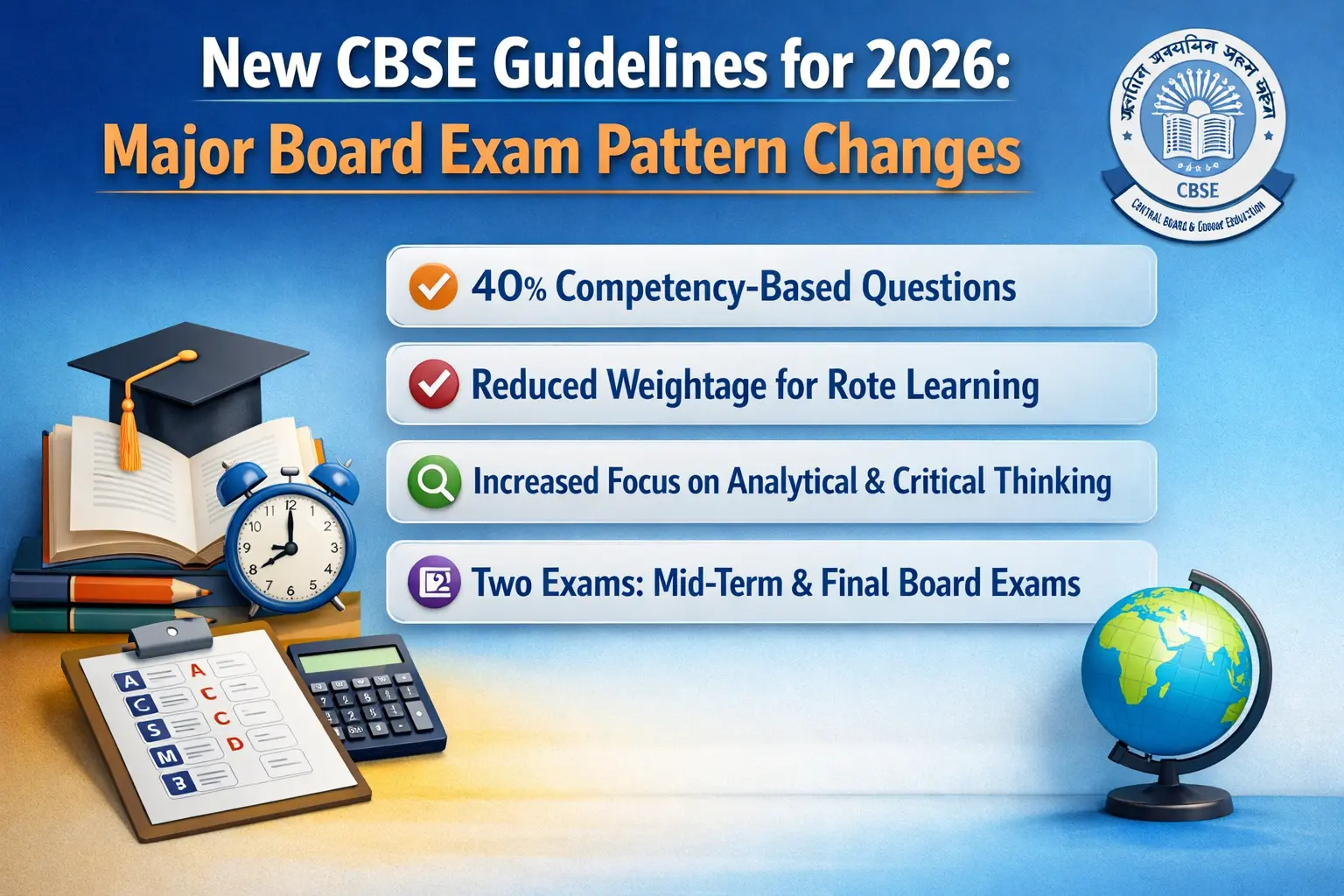
Here’s the reality: the new CBSE guidelines for 2026 aren’t just administrative updates. They’re a fundamental rethinking of how we assess student learning. The board has listened to years of feedback from educators, psychologists, and students themselves.
The Core Philosophy Shift
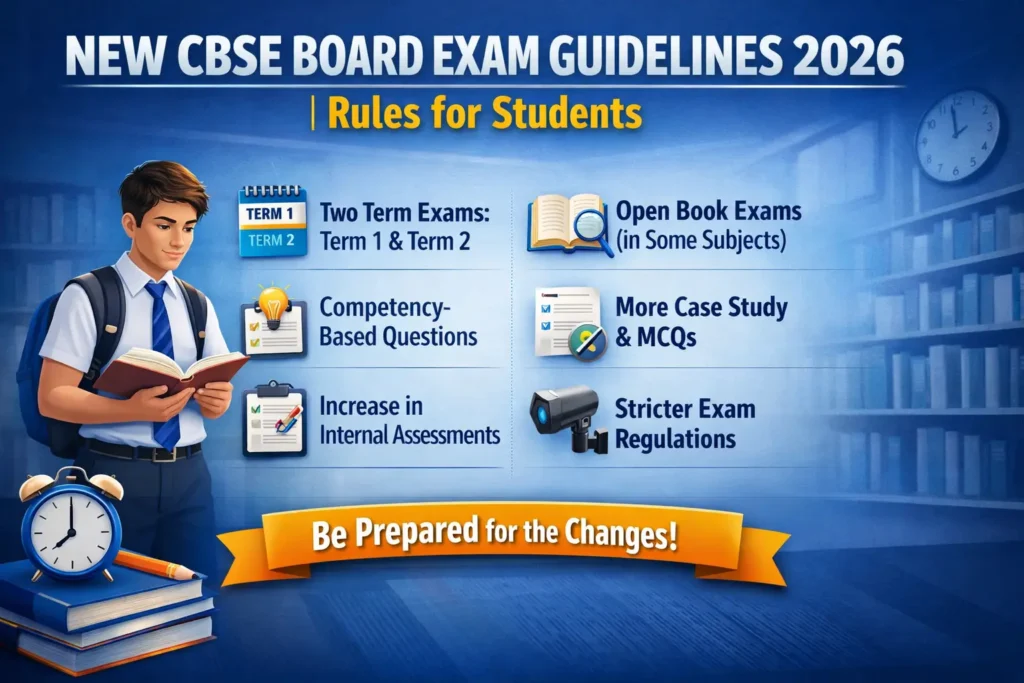
The CBSE has moved from a memorization-heavy framework to a competency-based assessment model. This isn’t just semantic reshuffling—it’s a complete paradigm shift.
What does this mean for your child? Instead of cramming facts the night before, they’ll need to demonstrate:
- Critical thinking across subjects
- Application of concepts to real-world scenarios
- Analytical skills that go beyond textbook boundaries
- Problem-solving using interdisciplinary approaches
Expert Insight: “The 2026 guidelines reflect what universities and employers have been asking for—students who can think, not just recall. This is excellent news for learners who understand concepts deeply rather than superficially.” — Dr. Meera Patel, Educational Psychologist with 20+ years in CBSE curriculum development
Breaking Down the CBSE Board Exam Pattern 2026: Subject-by-Subject Analysis
Roll up your sleeves. Let’s get into the specifics that matter.
For CBSE Class 10 Board Exam Students
The CBSE board exam for Class 10 in 2026 introduces several structural modifications:
Assessment Structure:
- Theory Component: 80 marks (formerly 100 in some subjects)
- Internal Assessment: 20 marks (increased weightage and standardized)
- Practical/Project Work: Enhanced emphasis with clearer evaluation rubrics
New Question Paper Design:
| Component | Weightage | Focus Area | Time Allocation |
| Multiple Choice Questions (MCQs) | 20% | Conceptual clarity | 30 minutes |
| Short Answer Questions | 30% | Application & understanding | 45 minutes |
| Long Answer Questions | 30% | Analytical thinking | 60 minutes |
| Case-Based/Source-Based Questions | 20% | Real-world problem-solving | 45 minutes |
The clock ticks differently now. Case-based questions demand that students read, analyze, and synthesize—all under timed conditions. This isn’t about working faster; it’s about working smarter.
For CBSE Board Exam for Class 12 Students
The CBSE board exams for Classes 10 and 12 share some common threads, but Class 12 carries distinct expectations:
Enhanced Rigor:
- Deeper integration of Higher Order Thinking Skills (HOTS)
- Increased emphasis on interdisciplinary learning
- More comprehensive project-based assessments
Subject-Specific Modifications:
The CBSE board exam subjects for 2026 have undergone individual revisions:
Science Stream:
- Physics: Greater focus on numerical problem-solving and experimental design
- Chemistry: Enhanced organic chemistry reasoning and environmental applications
- Biology: Increased NCERT-based case studies and ecosystem analysis
- Mathematics: More application-based problems across all chapters
Commerce Stream:
- Accountancy: Real-world financial scenarios and case studies
- Business Studies: Contemporary business environment analysis
- Economics: Data interpretation and policy analysis questions
Humanities Stream:
- History: Source-based questions with critical evaluation
- Political Science: Current affairs integration and constitutional analysis
- Geography: Map work and statistical interpretation emphasis
Pro Tip: “Start reading newspapers and watching educational documentaries now. The 2026 pattern rewards students who connect classroom learning to the world outside their textbooks.” — Rajesh Kumar, CBSE Board Examiner (2018-2024)
Internal Assessment: The Silent Game-Changer
Here’s what most parents overlook: those 20 marks for internal assessment aren’t “easy marks” anymore.
The CBSE Guideline for internal evaluation has teeth now. Schools must follow standardized procedures that include:
Components of Internal Assessment:
- Periodic Tests: 10 marks (conducted quarterly with uniform standards)
- Notebook Submission: 5 marks (evaluated for completeness and organization)
- Subject Enrichment Activities: 5 marks (projects, practical work, speaking assessments)
The smell of fresh notebook paper. The satisfaction of a well-organized binder. These seemingly small things now contribute meaningfully to final scores.
What changed? Accountability and standardization. Schools can no longer award internal marks arbitrarily. The CBSE has introduced:
- Moderation committees to review internal assessment
- Random sampling of student work for quality checks
- Mandatory documentation of all assessment activities
- Transparent reporting to parents every quarter
Examination Rules: What Students Must Know
The examination hall. That peculiar blend of air conditioning and nervous energy. The invigilator’s footsteps on polished floors.
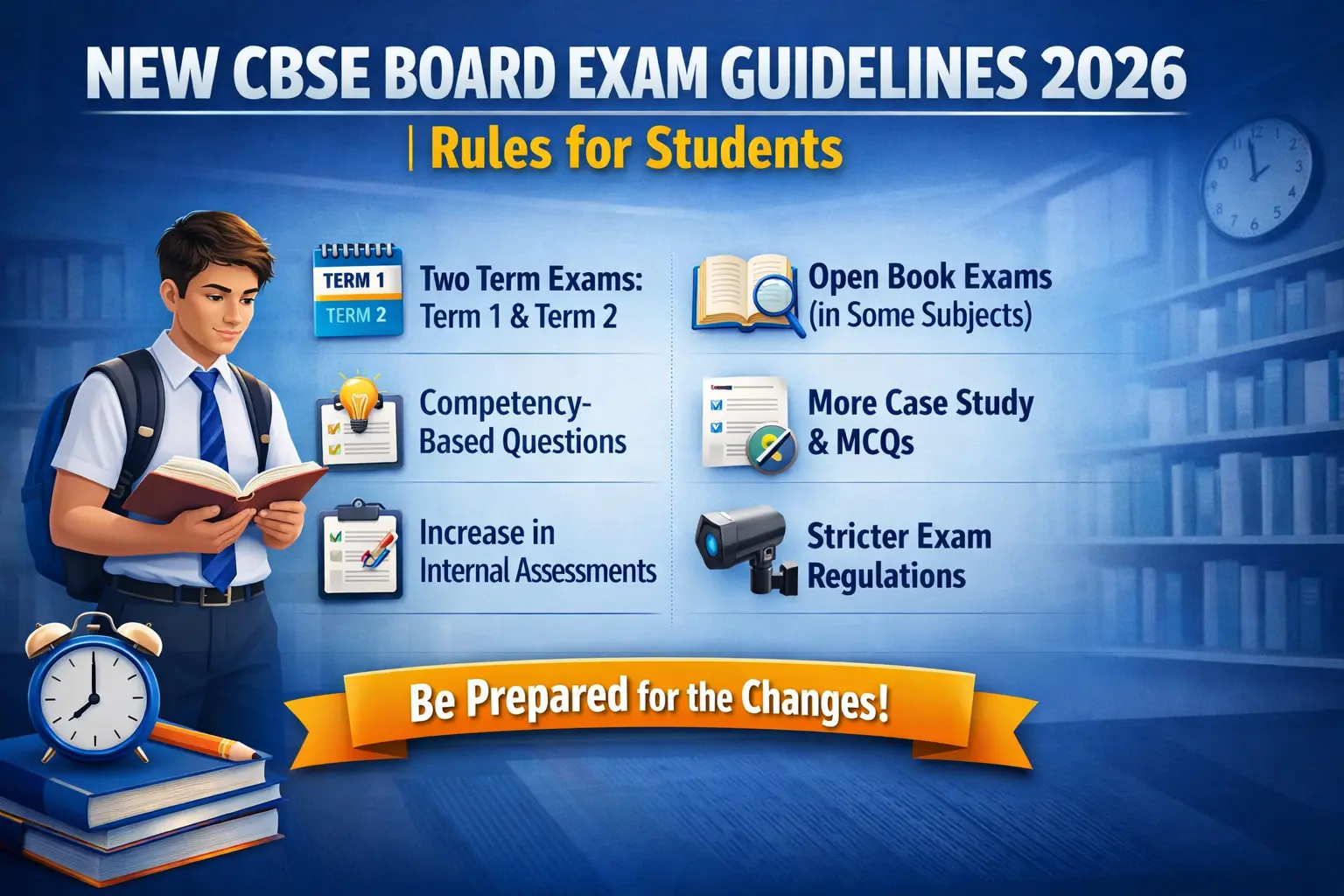
The CBSE board exam rules and regulations for students for 2026 include several updated protocols:
Entry and Conduct Rules
Updated Timing Protocols:
- Entry gates close 15 minutes before exam commencement (previously 10 minutes)
- Question paper reading time: 15 minutes (unchanged, but strictly enforced)
- No student permitted to leave the hall during the first hour or the last 15 minutes
Permitted Items (Strictly Limited):
- Transparent water bottle (label removed)
- Simple, non-programmable calculator (for specified subjects only)
- Geometry box (transparent preferred)
- Analog wristwatch (smartwatches strictly prohibited)
Prohibited Items (Zero Tolerance):
- Mobile phones or any electronic communication device
- Programmable calculators or smart devices
- Any paper scraps, notes, or study material
- Correction fluid or tape (pen scratching only)
Answer Sheet Guidelines: Critical Updates
The blue book. The answer sheet that holds months of preparation within its pages.
New CBSE Board Exams 2026 Answer Sheet Rules:
- Barcode stickers must be affixed in designated spaces (don’t cover question numbers)
- Blue or black ballpoint pen only (gel pens specifically mentioned as acceptable)
- No spiral binding or loose sheet submission
- Supplementary sheets must be properly tagged and numbered
- Overwriting is discouraged; single strikethrough for corrections
Expert Insight: “We’ve seen students lose marks not because of wrong answers, but because of illegible handwriting or improper answer sheet handling. Practice writing clearly under timed conditions—it matters more than you think.” — Sunita Sharma, Senior CBSE Examiner, English
Special Provisions for Students with Disabilities
The CBSE continues to strengthen its inclusive examination framework:
- Scribe facility for visually impaired students (with prior approval)
- Extra time (up to 60 minutes) for students with specific learning disabilities
- Separate examination rooms with necessary accommodations
- Assistive technology permission for documented cases
Application deadline for special provisions: 60 days before the first examination.
Subject-Wise Preparation Strategies for CBSE Board Exams 2026
Theory is one thing. Application is everything.
Mathematics: Beyond Formulas
The scratch of pencil on rough paper. The satisfaction of a solved equation.
Strategic Approach:
- Practice 10 previous years’ papers minimum (focus on 2020-2025 pattern changes)
- Master NCERT exemplar problems (now heavily referenced in exams)
- Time yourself: Complete papers in 2.5 hours (leaving 30 minutes for review)
- Create formula sheets for each chapter (write them by hand repeatedly)
High-Weightage Chapters for 2026:
- Algebra (equations, polynomials): 18-20 marks
- Coordinate Geometry: 12-15 marks
- Trigonometry: 15-18 marks
- Statistics and Probability: 10-12 marks
Science: Connecting Theory to Life
The hum of a laboratory. The precise measurement of solutions.
Physics Preparation:
- Focus on derivations AND numerical problems equally
- Understand the graph interpretations (5-6 questions guaranteed)
- Practice ray diagrams and circuit diagrams daily
- Memorize unit conversions and standard values
Chemistry Balance:
- Chemical equations must be balanced and precise
- Organic chemistry nomenclature: practice 50+ compounds
- Chemical reactions with conditions specified
- Environmental chemistry: current applications
Biology Depth:
- NCERT diagrams must be practiced (they appear verbatim in exams)
- Learn scientific names with correct spelling
- Human physiology: most frequently tested topic
- Genetics and evolution: conceptual clarity essential
Social Science: From Facts to Analysis
The weight of a thick textbook. The timeline of history unfolding.
Effective Study Method:
- Create mind maps for each chapter (visual learning aids retention)
- Answer previous years’ 5-mark questions in exactly 8 minutes
- Prepare contemporary examples for Economics and Political Science
- Geography: Practice map work daily (10-15 minutes sufficient)
Languages: Expression Over Grammar
The rhythm of well-chosen words. The power of clear expression.
English Preparation:
- Read one editorial daily (improves comprehension and vocabulary)
- Practice writing formats: letters, articles, reports (15-20 samples each)
- Literature: Focus on character analysis and theme extraction
- Grammar: Integrated approach (no separate grammar section, but accuracy matters)
Second Language Strategy:
- Conversation practice: 10 minutes daily makes a difference
- Writing practice in the target language (journal format helps)
- Literature portions: Character sketches and moral lessons
How Leading Institutions Are Adapting: A Case Study
Walk through the gates of [Delhi Public School, Dehradun], and you immediately sense the difference.
The campus spreads across 22 acres of thoughtfully designed learning spaces. Smart classrooms hum with interactive displays. The library—quiet except for the occasional turn of a page—houses over 45,000 resources. Science laboratories gleam with modern equipment.
But it’s not the infrastructure alone that sets this institution apart.
[Delhi Public School, Dehradun] has proactively restructured its entire academic framework around the new CBSE guidelines for 2026:
Comprehensive Preparation Ecosystem
Assessment Revolution:
- Weekly competency tests mirror the new CBSE pattern exactly
- Case-study Fridays where students tackle real-world problems
- Peer evaluation sessions that build critical thinking
- Mock boards conducted four times yearly with external invigilators
Student Support Structure:
- Dedicated doubt-clearing sessions every evening (4:30-6:00 PM)
- Subject mentors assigned to every student (personal academic coaching)
- Parental involvement programs (monthly progress reviews)
- Stress management workshops conducted by certified counselors
Infrastructure That Enables Excellence:
- Digital resource library with 10,000+ CBSE-aligned materials
- Collaborative study zones designed for group learning
- Individual study carrels for focused preparation
- 24/7 accessible online doubt forum managed by faculty
Pro Tip: “The school you choose should view the CBSE changes as an opportunity, not a burden. Look for institutions that have already integrated competency-based learning into daily teaching—not just exam time.” — Principal Anuradha Verma, Educational Leadership Expert
The difference shows in results: [Delhi Public School, Dehradun] students consistently score above the national average in board exams, but more importantly, they report feeling prepared rather than pressured.
Common Mistakes Students Make: And How to Avoid Them
The eraser shavings on the desk. The crossed-out answers. The hindsight of “I should have…”
Let’s prevent those moments.
Mistake #1: Ignoring Internal Assessments
The Error: Thinking “I’ll focus when boards start.”
The Reality: 20% of your total score comes from continuous evaluation. That’s the difference between 90% and 72%.
The Fix:
- Submit all notebooks on time
- Take periodic tests seriously (they’re dress rehearsals)
- Invest effort in projects (10 hours of good work = 5 guaranteed marks)
Mistake #2: Rote Learning in a Competency-Based System
The Error: Memorizing answers without understanding concepts.
The Reality: The CBSE board exam pattern 2026 specifically tests application, not recall.
The Fix:
- Ask “why” and “how” for every concept
- Practice explaining topics to someone else (teaching = deep learning)
- Solve variations of the same problem type
Mistake #3: Poor Time Management During Exams
The Error: Spending 45 minutes on a 5-mark question.
The Reality: Unbalanced time allocation costs students 15-20 marks on average.
The Fix:
- Practice timed sections (not just full papers)
- Follow the 1 mark = 1.5 minutes rule strictly
- Skip difficult questions, return after completing easier ones
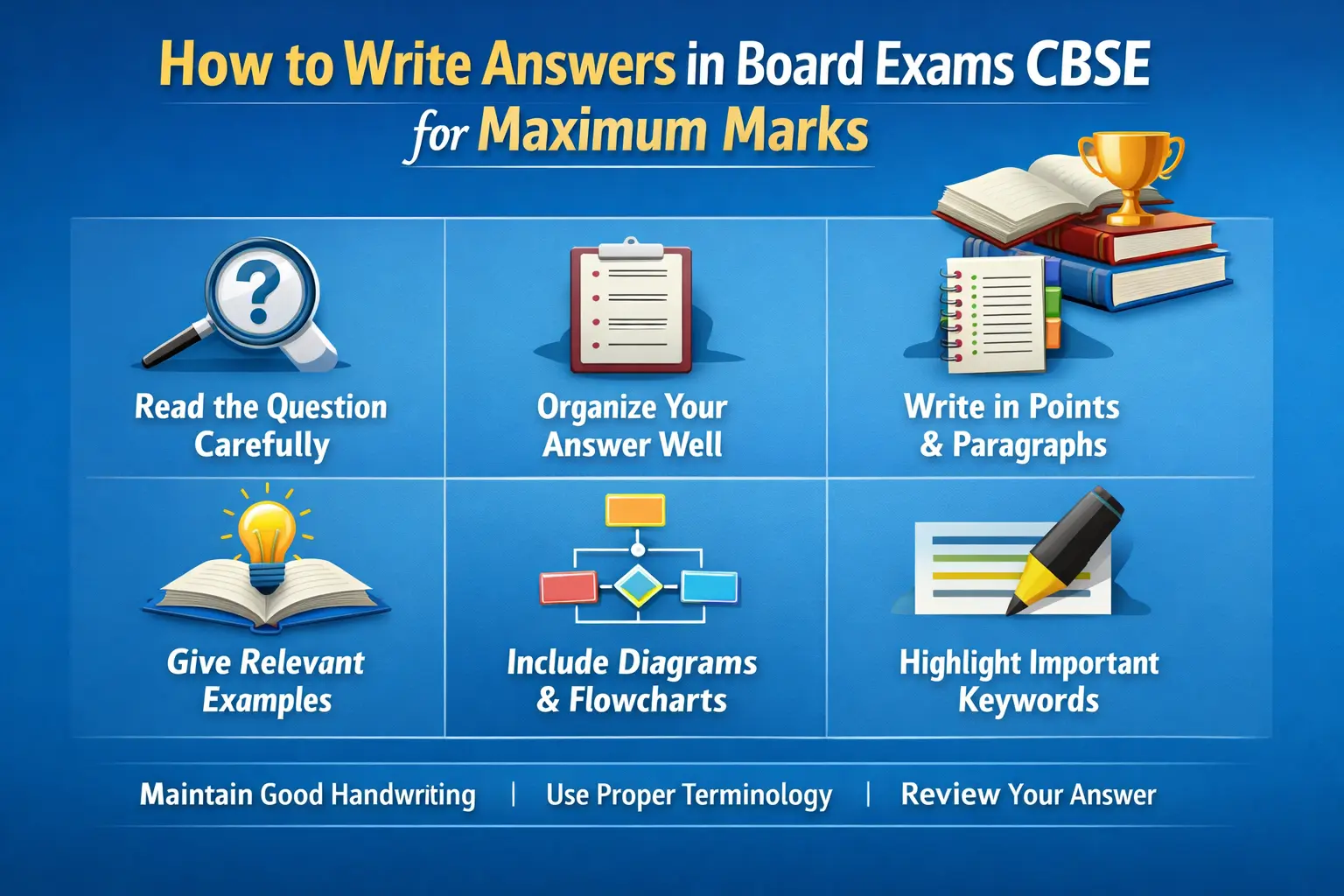
Mistake #4: Neglecting Answer Presentation
The Error: Messy handwriting, no underlining, cramped spacing.
The Reality: Two identical answers can receive different marks based on presentation.
The Fix:
- Practice writing on ruled paper (match exam sheets)
- Underline keywords and headings
- Leave margins and space between answers
- Number sub-parts clearly
Parent’s Role: Supporting Without Pressuring
The kitchen table becomes a study desk. The living room, a makeshift coaching center. Parents become unintentional teachers.
But here’s the delicate truth: your involvement matters, but your anxiety transfers.
Healthy Support Strategies
What Works:
- Creating a distraction-free study environment (dedicated space with good lighting)
- Maintaining consistent meal and sleep schedules (brain function depends on routines)
- Offering practical help (arranging study materials, managing logistics)
- Celebrating small wins (completed chapters, improved test scores)
What Doesn’t:
- Comparing with neighbors’ children (creates resentment, not motivation)
- Constant surveillance (hovering doesn’t equal caring)
- Discussing your own board exam experiences repeatedly (different era, different system)
- Making performance conditional for love or approval (devastating for mental health)
Expert Insight: “The best parent-student relationship during board prep is that of a supportive coach, not a demanding boss. Your job is to provide resources and encouragement—their job is to perform.” — Dr. Kavita Reddy, Child Psychologist
Warning Signs of Unhealthy Stress
Watch for these indicators:
- Sleep disruptions (insomnia or excessive sleeping)
- Appetite changes (skipping meals or stress eating)
- Social withdrawal (avoiding friends completely)
- Physical symptoms (frequent headaches, stomach issues)
- Emotional outbursts (unusual irritability or crying)
If you notice multiple signs, consult a professional. The CBSE board exams 2026 are important, but your child’s wellbeing is paramount.
Technology and Resources: Smart Study Tools
The glow of a laptop screen. The ping of an educational app notification. Technology isn’t the enemy—it’s an enabler when used wisely.
Recommended Digital Resources
Official CBSE Resources:
- CBSE Academic Portal (cbseacademic.nic.in) – Sample papers and syllabus
- DIKSHA Platform – Free NCERT-aligned content
- ePathshala – Digital textbooks and multimedia resources
Quality Third-Party Platforms:
- Khan Academy (for Mathematics and Science conceptual clarity)
- National Digital Library (for reference materials)
- YouTube Channels (select verified educators only)
Mobile Apps Worth Downloading:
- Pomodoro timers (for focused study sessions)
- Anki or Quizlet (for active recall practice)
- Forest App (to minimize phone distractions)
The 80-20 Rule for Technology
Spend 80% of study time on traditional methods:
- Writing notes by hand (enhances memory retention)
- Solving on paper (builds exam muscle memory)
- Reading physical textbooks (reduces screen fatigue)
Use 20% for digital resources:
- Watching concept videos
- Taking online mock tests
- Accessing supplementary materials
Month-by-Month Preparation Timeline for CBSE Board Exams 2026
The calendar on the wall. Each month a milestone. Planning transforms overwhelm into manageable steps.
February – March 2025 (16 months before exams)
Focus: Foundation Building
- Complete first reading of all subjects
- Create chapter-wise summary notes
- Start NCERT exercises (don’t skip even one)
- Build study routine (consistency over intensity)
April – June 2025 (12-14 months before)
Focus: Depth and Clarity
- Second reading with deeper understanding
- Begin reference book problems (RD Sharma, RS Aggarwal, Lakhmir Singh)
- Start weekend mock tests (chapter-wise)
- Address weak areas identified in mocks
July – September 2025 (9-11 months before)
Focus: Application Practice
- Solve previous 5 years’ papers (subject-wise)
- Practice case-based questions (new format familiarity)
- Strengthen writing speed (timed practice)
- Complete practical/project work
October – December 2025 (6-8 months before)
Focus: Consolidation
- Revision rounds (third reading with focus on difficult topics)
- Full-length mock tests (every weekend)
- Create one-page summaries per chapter
- Fine-tune time management strategies
January 2026 (5 months before)
Focus: Intensive Practice
- Daily practice papers (alternate subjects)
- Peer discussion groups (collaborative learning)
- Solve CBSE sample papers (official pattern)
- Build formula and keyword lists
February 2026 (Board Exams Begin)
Focus: Strategic Revision
- Light revision only (don’t learn new content)
- Solve one previous year paper daily
- Maintain health and sleep (non-negotiable)
- Stay positive and confident (mental state matters)
Pro Tip: “The students who perform best aren’t always the most intelligent—they’re the most organized. A good study plan beats raw talent every time.” — Ramesh Chandra, Academic Coach with 25+ years experience
Final Thoughts: The Exam That Shapes Tomorrow
The sunrise on exam day. The deep breath before entering the hall. The pen touching paper for the first time.
These moments will come. But they’re not monsters—they’re milestones.
The new CBSE guidelines for 2026 reflect something profound: a recognition that education should prepare students for life, not just examinations. The shift toward competency-based assessment isn’t about making exams harder—it’s about making them more meaningful.
Your child isn’t just preparing for the CBSE board exams 2026. They’re developing skills that will serve them in university, careers, and life: critical thinking, time management, resilience under pressure, and the ability to apply knowledge creatively.
The journey from today to February 2026 is long enough to prepare thoroughly and short enough to stay focused. With the right understanding of the CBSE board exam rules and regulations for students, strategic preparation, and institutional support from forward-thinking schools like [Delhi Public School, Dehradun], success isn’t just possible—it’s probable.
The changes aren’t your enemy. Uncertainty is.
And you’ve just defeated uncertainty with knowledge.
Frequently Asked Questions (FAQs)
1. What are the main changes in CBSE board exam rules and regulations for students in 2026?
The primary changes include: (a) competency-based question paper design with increased weightage for case studies and analytical questions, (b) standardized internal assessment procedures with mandatory moderation, (c) stricter examination hall protocols including earlier gate closures, and (d) enhanced provisions for students with disabilities. The assessment now focuses on application and critical thinking rather than memorization.
2. How is the CBSE board exam pattern 2026 different from previous years?
The 2026 pattern introduces a revised distribution: 20% MCQs, 30% short answers, 30% long answers, and 20% case-based questions. Internal assessment weightage has increased to 20 marks with standardized evaluation criteria. The emphasis has shifted dramatically toward Higher Order Thinking Skills (HOTS) across all subjects, with real-world application scenarios replacing traditional recall-based questions.
3. Are the rules same for CBSE Class 10 board exam and Class 12?
While both classes follow the competency-based framework, Class 12 exams have deeper analytical requirements and more complex case studies. Class 12 internal assessments include mandatory research projects in most subjects. The question paper difficulty level and expected depth of answers are significantly higher for Class 12, reflecting college-readiness expectations.
4. Which CBSE board exam subjects for 2026 have undergone the most changes?
Mathematics and Science streams have seen substantial restructuring, with increased emphasis on numerical problem-solving and experimental design. Social Science subjects now require contemporary examples and data interpretation. Languages have shifted toward integrated assessment (grammar tested through writing, not as separate sections). All subjects now include mandatory case-study questions.
5. How can students prepare for the new CBSE guidelines for 2026?
Start by understanding that depth matters more than coverage. Practice case-based questions weekly, develop answer-writing skills under timed conditions, maintain organized notebooks for internal assessment, and focus on NCERT thoroughly before touching reference books. Most importantly, develop the habit of connecting classroom learning to real-world situations through newspapers, documentaries, and discussions.
6. When will the official CBSE board exams 2026 datesheet be released?
Based on historical patterns, CBSE typically releases the datesheet 6-8 weeks before the commencement of practical exams. Expect the official notification around December 2025 for exams beginning in February 2026. Always check the official CBSE website (cbse.gov.in) for confirmed dates rather than relying on unofficial sources.
7. What internal assessment changes should students prepare for?
Internal assessments now require documented evidence of all evaluations. Students must maintain complete notebooks, participate in periodic tests (which cannot be skipped), and complete subject enrichment activities on time. Schools will conduct moderation reviews, meaning internal marks must be earned, not assumed. Start taking unit tests seriously from the beginning of the academic year.
8. How many hours should a student study daily for CBSE board exams 2026?
Quality matters more than quantity. A focused 6-7 hours daily (including school time) is more effective than 10 distracted hours. Follow this distribution: 4-5 hours self-study, 1-2 hours homework/assignments, 1 hour revision/practice tests. Adjust based on individual learning pace. Always prioritize sleep (8 hours minimum) over additional study time—your brain consolidates learning during rest.
9. Can students appear for improvement exams under the new guidelines?
Yes, the improvement exam provision continues. Students can appear for improvement in one or more subjects within the same academic year. However, note that the best score counts—if you perform worse in the improvement exam, that lower score will be considered. Improvement exams follow the same pattern and rules as the main board exams.
10. What happens if a student violates examination rules in CBSE board exams 2026?
Violations carry serious consequences: mobile phone possession results in automatic disqualification from that subject, copying or unfair means leads to cancellation of all subjects, and misbehavior with invigilators can result in ban from future examinations. The CBSE maintains a strict zero-tolerance policy. Always follow the CBSE board exam rules and regulations for students precisely—no exception is worth risking your academic career.