
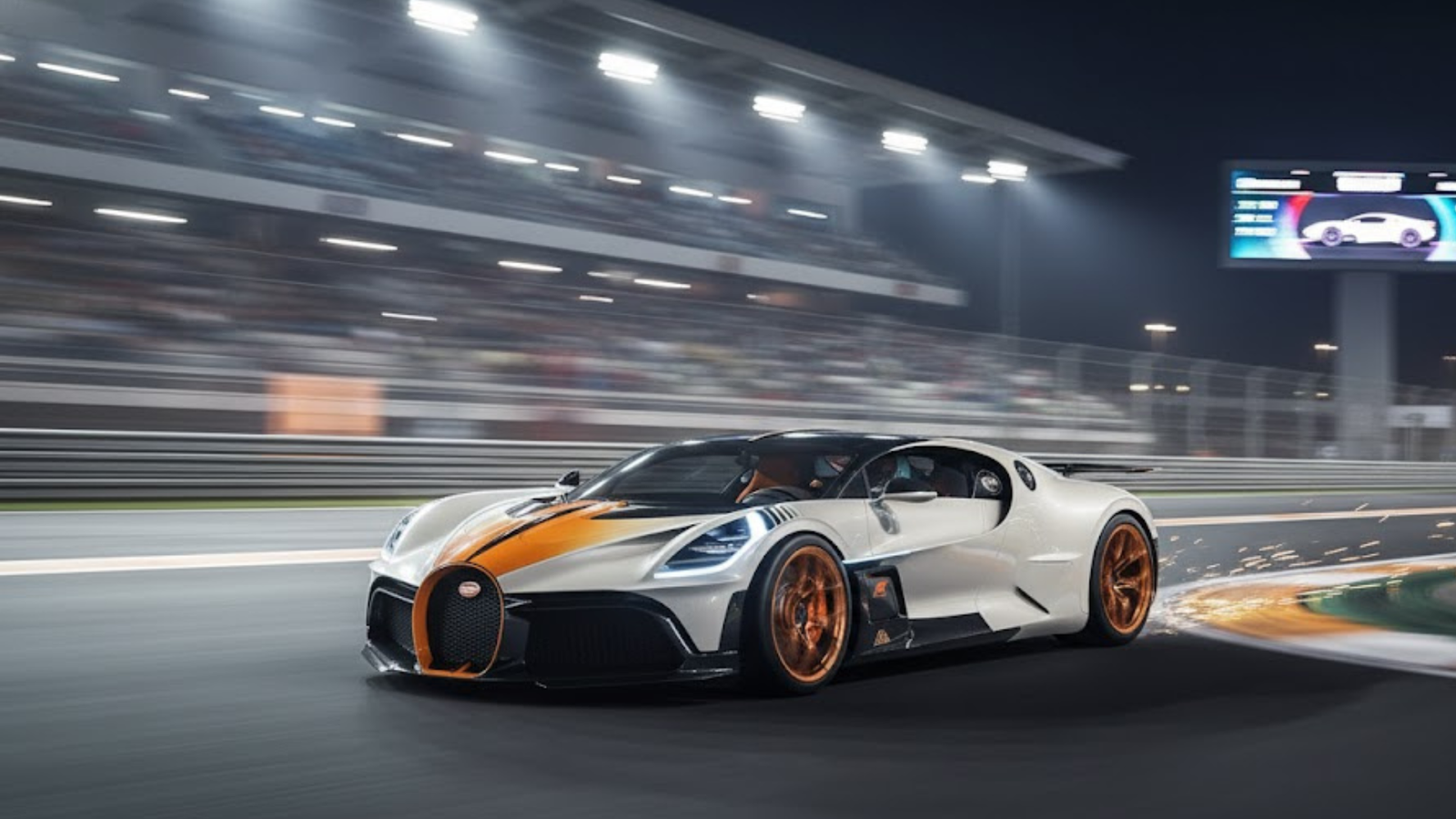
In the world of automotive journalism, we are constantly chasing the “next big thing.” For 2026, the headlines are dominated by the arrival of the Bugatti Tourbillon, a V16 hybrid marvel. But amidst the electrification frenzy, one shadow looms larger than any other. It is a long-tailed, gas-guzzling, physics-defying monster that refuses to go quietly into the night.
I am talking, of course, about the Bugatti Chiron Super Sport.
While 2026 marks the official “end of production” era for the Chiron platform, this year is critical. It is the moment the Super Sport transitions from a “current model” to an “eternal legend.” As the final deliveries hit the driveways of the ultra-wealthy, and the world pivots to hybrids, the Chiron Super Sport stands alone as the absolute pinnacle of pure, turbocharged internal combustion.
As an expert who has covered the rise of the W16 engine for over a decade, I’m here to tell you: this isn’t just a car. It is the Concorde of the road. And in 2026, it is still the ultimate driving machine.
The Heart of the Beast: 1,600 HP of Pure Fury
The defining feature of the Chiron Super Sport is an engine that should technically be impossible. The 8.0-liter Quad-Turbo W16 is not just an engine; it’s a mechanical monument.
Unlike the new 2026 Tourbillon, which relies on electric motors to fill in the torque gaps, the Chiron Super Sport does it the old-fashioned way: with massive displacement and four turbochargers the size of your head.
- Power: 1,578 HP (1,600 PS)1
- Torque: 1,600 Nm2
- 0-124 mph (200 km/h): 5.8 seconds3
- Top Speed: Electronically limited to 273 mph (440 km/h).4
Expert Insight: What these numbers don’t tell you is the feeling. In 2026, electric hypercars can accelerate faster to 60 mph. But above 100 mph, EVs start to run out of breath. The Chiron Super Sport? It wakes up at 100 mph. The acceleration from 200 km/h to 300 km/h feels as violent as the launch. It is a relentless, unending wave of thrust that no battery pack can replicate.
Mileage: The Number You Were Afraid to Ask
You asked for it, so let’s address the elephant in the room. In an era where we obsess over MPGe and range efficiency, the Chiron Super Sport is delightfully, apologetically wasteful.
If you drive this car as intended, you aren’t measuring mileage in “miles per gallon.” You are measuring it in “gallons per minute.”
- City: ~8-9 MPG
- Highway: ~14 MPG
- Combined: ~10 MPG (approx. 23.5 L/100km)
- Full Throttle Range: At top speed, the 100-liter fuel tank will run dry in roughly 8 to 9 minutes.5
The Verdict: Does it matter? No. If you can afford the $40,000 tire change, you can afford the gas. In fact, in 2026, burning this much fuel feels like an act of rebellion.
Design: The “Longtail” Philosophy
The visual difference between a standard Chiron and the Super Sport is functional, not just cosmetic. This is the “Longtail” evolution.
Bugatti extended the rear of the car by approximately 25 centimeters (9.8 inches).6 Why? Aerodynamics. To break the 300 mph barrier (which the prototype version did, hitting 304 mph), the air needs to stay attached to the body for as long as possible to reduce drag.7
- Vertical Exhausts: Notice the exhaust pipes are stacked vertically, not centrally. This frees up space for a massive rear diffuser that sucks the car to the tarmac.
- Fender Vents: The circular vents on top of the front fenders aren’t just a nod to the 1990s EB110; they suck turbulent air out of the wheel wells to prevent the front end from lifting at 250 mph.8
Advanced Features: Analog Mastery in a Digital World
In 2026, cars are giant iPads on wheels. The Chiron Super Sport resists this.
- The “Timeless” Interior: There are no massive central touchscreens to become outdated. The dials are mechanical, made of Swiss-watch-grade aluminum and diamonds. The speedo reads to 500 km/h.
- X-Rayed Tires: The Michelin Pilot Sport Cup 2 tires are custom-engineered for this car.9 Every single tire produced is X-rayed to ensure there are no imperfections, because a bubble in the rubber at 273 mph would be catastrophic.
- Hydraulic Suspension: The car lowers itself in “Top Speed Mode,” tucking its wheels into the arches to slice through the air. It is active aerodynamics at its finest.
Chiron Super Sport vs. The 2026 Tourbillon
This is the comparison every buyer in 2026 is making.
| Feature | Chiron Super Sport | Bugatti Tourbillon (2026) |
| Engine | 8.0L Quad-Turbo W16 | 8.3L N/A V16 + 3 Electric Motors |
| Aspiration | 4 Turbochargers | Naturally Aspirated + Hybrid |
| Horsepower | 1,600 HP | 1,800 HP (Combined) |
| Character | A Jet Engine on Wheels | A High-Revving F1 Car |
| Status | The End of an Era | The Future |
My Take: The Tourbillon is technically “better.” It’s lighter, has a cooler instrument cluster, and revs higher. But the Chiron Super Sport is the last of the turbos. The “whoosh” of those four turbos spooling up is a sound the world will never produce again. That makes the Chiron the bigger collector’s item.
Final Verdict: The Ultimate Evolution
The 2026 Bugatti Chiron Super Sport is not a car for the faint of heart, nor is it for the environmentally conscious. It is a celebration of excess. It is the automotive equivalent of a mechanical watch in a digital age—technically obsolete, yet infinitely more valuable.
If you have the means to acquire one on the secondary market in 2026, do it. We will build faster cars. We will build more efficient cars. But we will never, ever build a W16 engine again.