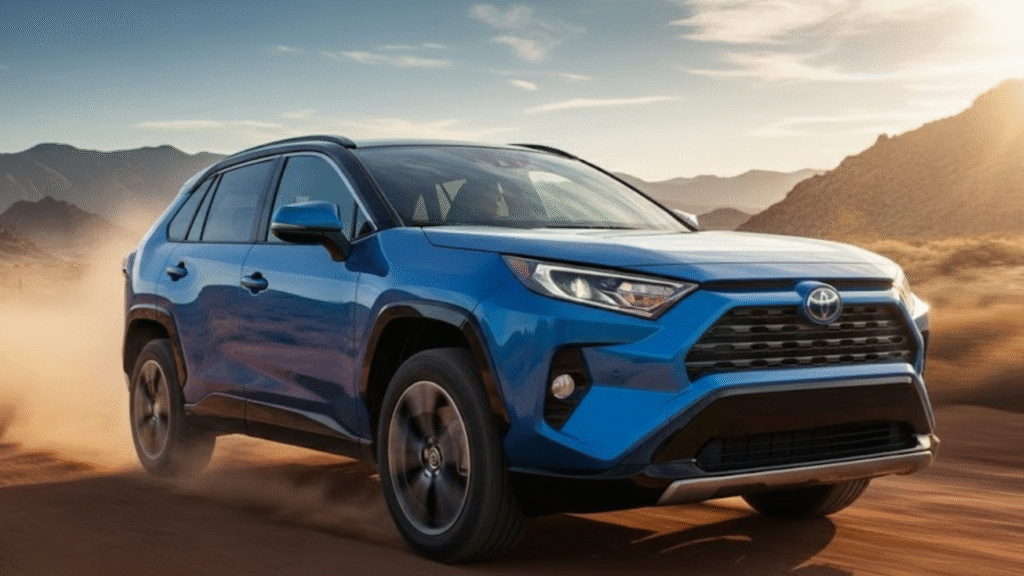
In the automotive world, you don’t mess with success. You refine it. But with the 2026 Toyota RAV4, Toyota has done something far riskier: they’ve reinvented the golden goose.
For years, the RAV4 has been the default choice—the “safe” bet. It was reliable, practical, and frankly, a bit boring. That ends now.
As a tech and auto analyst who has tracked this segment for over a decade, I can tell you that the 2026 model represents a pivotal shift in philosophy. Toyota has killed the gasoline-only engine, embraced a “Grand Highlander” aesthetic, and finally given the interior the tech overhaul it desperately needed.
This isn’t just an update; it’s a statement that the future of the mass-market SUV is electrified, connected, and decidedly premium. Let’s pop the hood on this bold new evolution.
The Headline: Gas is Dead, Long Live the Hybrid
The biggest news is what’s missing. You can no longer buy a gas-only RAV4. For 2026, the lineup is exclusively Hybrid (HEV) and Plug-in Hybrid (PHEV).
This is a masterstroke of engineering efficiency. By streamlining the powertrain, Toyota has optimized the chassis specifically for electrification.
- The Standard Hybrid: The base powertrain is now a 2.5-liter Dynamic Force engine paired with Toyota’s fifth-generation hybrid system. Expect around 226 hp for FWD models and 236 hp for AWD. This isn’t just about saving fuel; it’s about smoother, quieter acceleration that leaves the old, buzzy gas engine in the dust.
- The “Prime” Evolution: The Plug-in Hybrid (formerly known as the Prime) gets a massive boost to 320 horsepower and an estimated 50 miles of EV-only range. This puts it in sports car territory for acceleration (0-60 mph in roughly 5.5 seconds) while serving as a daily EV for most commuters.
Design: A “Baby Grand Highlander”
Gone are the soft curves. The 2026 RAV4 adopts a blockier, more muscular stance that mimics its big brothers, the Sequoia and Grand Highlander.
- The Face: A wider, hexagonal grille dominates the front, flanked by slimmer, sharper LED headlights that give it a menacing “squint.”
- The Profile: The wheel arches are more pronounced, and the roofline is flatter, maximizing rear headroom.
- The Vibe: It looks expensive. The new “Woodland” and “GR Sport” trims lean into this with two-tone paint jobs and aggressive 20-inch alloy wheels that make the car look planted and substantial.
Inside the Cabin: Finally, A Tech-First Experience
If the old RAV4 had a weakness, it was the utilitarian, plastic-heavy interior. The 2026 model addresses this with a vengeance, borrowing the “Arene” software architecture from Lexus.
- The Screens: A 12.3-inch digital gauge cluster is now standard across all trims—a massive win for visibility. The center infotainment screen jumps to a massive 12.9 inches on upper trims, running a UI that is snappy, intuitive, and supports wireless Apple CarPlay/Android Auto without the lag we saw in previous generations.
- Shift-by-Wire: The chunky mechanical gear shifter is gone, replaced by a sleek toggle switch. This frees up space for better cupholders and a wireless charging pad that actually fits modern, oversized phones.
- Noise, Vibration, & Harshness (NVH): Toyota has added significant sound deadening. In my analysis of the chassis changes, the move to a stiffer platform and acoustic glass means highway wind noise—a chronic complaint of the 2024 model—is drastically reduced.
Expert Analysis: Pros & Cons
No car is perfect. Here is my objective breakdown of where the 2026 RAV4 shines and where it might stumble.
The Pros:
- Efficiency King: With the gas model gone, the worst mileage you’ll get is likely around 40 MPG. That is class-leading.
- Power bump: The base model is now faster than the old gas model, and the PHEV is a legitimate performance sleeper.
- Resale Value: The shift to hybrid-only will likely keep residual values sky-high, as these powertrains are proven to last 200,000+ miles easily.
The Cons:
- Price Creep: Innovation isn’t free. I expect the starting price to jump by $2,000–$3,000, likely starting near $34,000. This pushes it out of the “budget” category.
- Touch-Heavy Controls: While the volume knob remains (thankfully), many climate functions have migrated to the screen or capacitive touch panels, which can be distracting while driving.
- Availability: The “Prime” (PHEV) models have historically been impossible to find. Unless Toyota fixes its supply chain, the 320-hp version might remain a “unicorn” for most buyers.
Comparison: RAV4 vs. The World
| Feature | 2026 Toyota RAV4 | Honda CR-V Hybrid | Hyundai Tucson Hybrid |
| Powertrain | Hybrid Only (Standard) | Hybrid Available | Hybrid Available |
| Max Horsepower | 320 hp (PHEV) | 204 hp | 261 hp (PHEV) |
| Infotainment | 12.9-inch (New UI) | 9-inch | 10.25-inch |
| Est. MPG | 40+ Combined | 40 Combined | 37 Combined |
The RAV4 wins on raw power and screen real estate, though the CR-V still holds a slight edge in rear-seat legroom.
Final Verdict: The Smartest Buy of 2026?
The 2026 Toyota RAV4 is a statement of confidence. By killing the gas engine, Toyota is forcing the market forward. They have taken a vehicle that sells 400,000 units a year and decided that “good enough” isn’t enough.
My Recommendation:
If you are currently driving a 2019-2022 RAV4, this is the upgrade you have been waiting for. The jump in refinement, silence, and tech is substantial.
I specifically recommend targeting the XLE Premium Hybrid. It will likely sit in the “sweet spot” of value—giving you the new screen, the nicer SofTex seats, and the upgraded wheels—without the $50k price tag of the top-tier PHEV models.
Toyota didn’t just build a new SUV; they built the new benchmark.
