Visiting the Vaishno Devi Temple is more than a pilgrimage—it’s a spiritual and cultural experience that draws millions of devotees every year. Nestled in the Trikuta Hills of Jammu and Kashmir, this sacred shrine dedicated to Goddess Vaishno Devi offers a journey filled with devotion, breathtaking landscapes, and unique local experiences. For first-time visitors, solo travelers, and families alike, understanding the best way to reach Vaishno Devi Temple is crucial for a safe and memorable trip.
Overview of Shri Mata Vaishno Devi Katra
Shri Mata Vaishno Devi Katra is the gateway to the shrine, located about 42 km from Jammu city. Over the years, Katra has transformed from a small town into a bustling base for pilgrims, complete with accommodations, restaurants, and transport facilities.
Why Katra is Important
- Acts as the primary base for all treks and transport options.
- Offers a wide range of accommodations from budget guesthouses to premium hotels.
- Local markets provide souvenirs, religious items, and trekking essentials.
- Easily accessible via air, rail, and road.
Katra Distance from Cities of India
| Cities | Distance (Km) |
| Delhi to Katra | 640 km |
| Mumbai to Katra | 2027 km |
| Srinagar to Katra | 221 km |
| Leh to Katra | 643 km |
| Kanpur to Katra | 1138 km |
| Bangalore to Katra | 2834 km |
| Gujarat to Katra | 1523 km |
| Punjab to Katra | 302 km |
Best Way to Reach Vaishno Devi Temple
There are multiple ways to reach the temple, and the choice depends on your preference, budget, and convenience. Each route has its own charm and considerations.
1. By Air
The closest airport is Jammu Airport (Satwari Airport), approximately 45 km from Katra.
Connectivity:
- Regular flights connect Jammu with major cities such as Delhi, Mumbai, Chandigarh, and Bangalore.
- Airlines often increase flights during peak pilgrimage seasons like Navratri.
Travel Tips:
- Hire a taxi or take a state-run bus to Katra (1.5–2 hours journey).
- Morning flights are ideal to start the trek early.
- Keep luggage light to manage the trek comfortably.
2. By Train
Katra now has its own railway station, Katra Railway Station, connected to most major cities in India.
Popular Train Routes:
- Jammu Tawi to Katra: 4–5 hours.
- New Delhi to Katra: Overnight trains available.
- Other northern cities like Chandigarh, Lucknow, and Kolkata also offer trains via Jammu Tawi with onward connection to Katra.
Travel Tips:
- Book tickets in advance, especially during festivals and peak seasons.
- Carry snacks and water for the journey.
- Opt for daytime trains if you prefer scenic views.
3. By Road
Katra is well-connected by road, and road travel offers flexibility and the opportunity to enjoy the scenic surroundings.
Bus Services:
- Jammu to Katra: Frequent buses run by state transport and private operators.
- Srinagar to Katra: Long-distance buses are available, though journeys can be longer.
Self-Drive or Taxi:
- From Jammu, it takes around 1.5–2 hours.
- Roads are hilly but well-maintained.
- Local taxis are available for day trips or sightseeing.
Travel Tips:
- Check weather forecasts during winter and monsoon seasons.
- Carry warm clothing, raincoats, and trekking gear.
Trek Route Up to Vaishno Devi
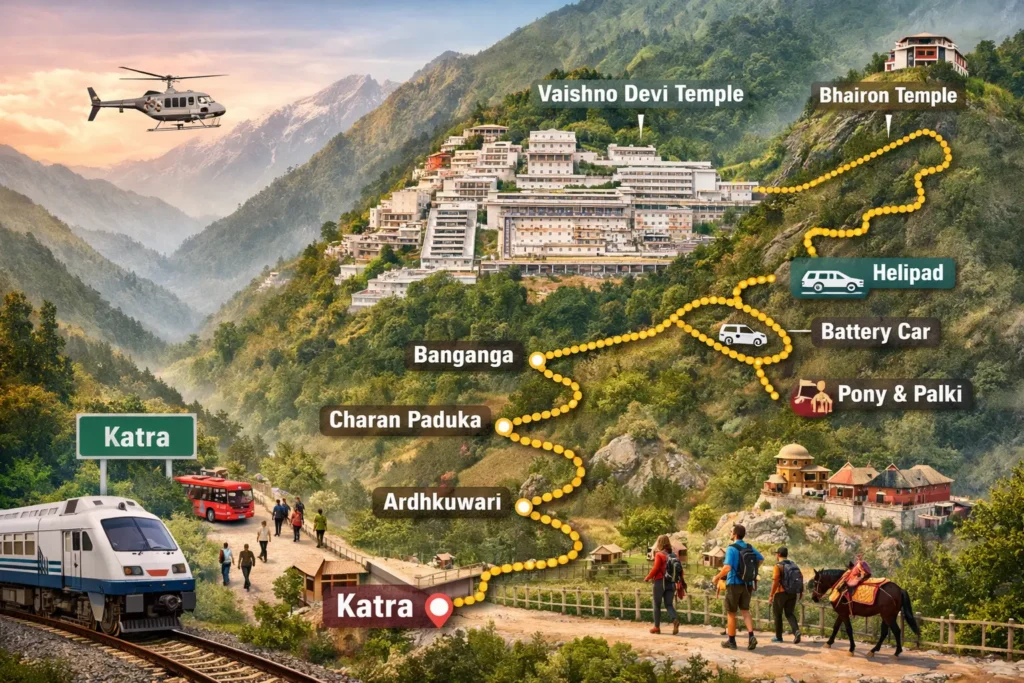
Once in Katra, pilgrims begin the 13 km trek up to the shrine. The trek is moderately challenging and takes between 5–8 hours depending on fitness.
Modes of Trek
- On Foot: Traditional and spiritual; provides a full experience of the landscape and devotional chants.
- Ponies and Palkis: Available for those unable to walk the full distance; ensure proper bookings in advance.
- Helicopter Service: Quickest option, landing near Bhawan. Book online through official portals for availability.
Key Stops Along the Trek
- Banganga: A holy river and resting point; devotees take water from the spring here.
- Charan Paduka: Contains footprints of Goddess Vaishno Devi.
- Adhkuwari: The last resting point before the final climb to the shrine.
Travel Tips:
- Start early in the morning to avoid crowds.
- Wear trekking shoes with good grip.
- Carry light snacks, water, and energy drinks.
- Pace yourself and take breaks to enjoy the scenic views.
Safety and Comfort on the Trek
- Avoid trekking in slippery monsoon conditions.
- Be cautious of altitude-related fatigue; the elevation is moderate but enough to tire beginners.
- First-aid and medical facilities are available along the trek.
Best Time to Visit Vaishno Devi
Choosing the right season enhances both safety and the spiritual experience.
- Spring (March–May): Pleasant weather, perfect for trekking and sightseeing.
- Autumn (September–November): Clear skies, moderate temperatures, and less rainfall.
- Winter (December–February): Cold and peaceful; ideal for those who prefer fewer crowds.
- Monsoon (July–August): Not recommended due to slippery paths and heavy rainfall.
Travel Tips:
- Avoid peak Navratri periods if you prefer a less crowded pilgrimage.
- Advance booking of hotels and transportation is highly recommended during festive seasons.
Places to Visit Near Vaishno Devi
While Vaishno Devi is the main attraction, the surrounding areas offer plenty to explore.
1. Katra Town
- Bustling local markets with handicrafts, prayer beads, and souvenirs.
- Restaurants serving local and North Indian cuisine.
2. Trikuta Hills
- Scenic trekking trails.
- Flora and fauna exploration for nature lovers.
3. Jammu City
- Raghunath Temple: One of the largest temple complexes in North India.
- Bahu Fort: Historical fort with panoramic views.
- Mubarak Mandi Palace: Royal architecture and museum.
4. Sanjichhat
- Lesser-known trekking spot near Vaishno Devi.
- Offers a peaceful environment, perfect for meditation and photography.
5. Other Nearby Pilgrimage Sites
- Mata Shivkhori: Cave temple dedicated to Lord Shiva.
- Peer Kho Cave Temple: Another serene spiritual site.
Practical Tips for Travelers
- Health & Safety: Keep a small first-aid kit, necessary medications, and maintain hydration.
- Accommodation: Katra offers hotels, guesthouses, and dharamshalas for all budgets.
- Packing Essentials: Comfortable trekking attire, walking shoes, sunscreen, hats, rain gear, and light snacks.
- Travel Apps & Guides: GPS apps, temple official portals, and local guides help with navigation and real-time crowd updates.
- Cash & Payments: While digital payments are widely accepted, carrying some cash for small purchases or offerings is advisable.
Personal Experience Insights
Walking the trek from Katra to the shrine is transformative. The combination of chanting pilgrims, fresh mountain air, and scenic views creates a deeply spiritual atmosphere. Resting at Banganga and Charan Paduka not only refreshes the body but also deepens the connection to the journey.
Visiting during off-peak periods allows for a quiet and reflective experience, while festival seasons immerse you in vibrant devotion and local culture.
Conclusion
Reaching Vaishno Devi Temple is a holistic journey of devotion, nature, and local culture. From choosing the best way to reach Vaishno Devi Temple, planning the trek, knowing the best time to visit Vaishno Devi, to exploring nearby attractions, careful planning ensures a memorable experience.
Take this pilgrimage as an opportunity to not just visit a temple, but to connect spiritually, enjoy scenic trails, and explore the rich culture of Shri Mata Vaishno Devi Katra. Share your experience, inspire others, and let the blessings of Goddess Vaishno Devi accompany you on every step of your journey.
